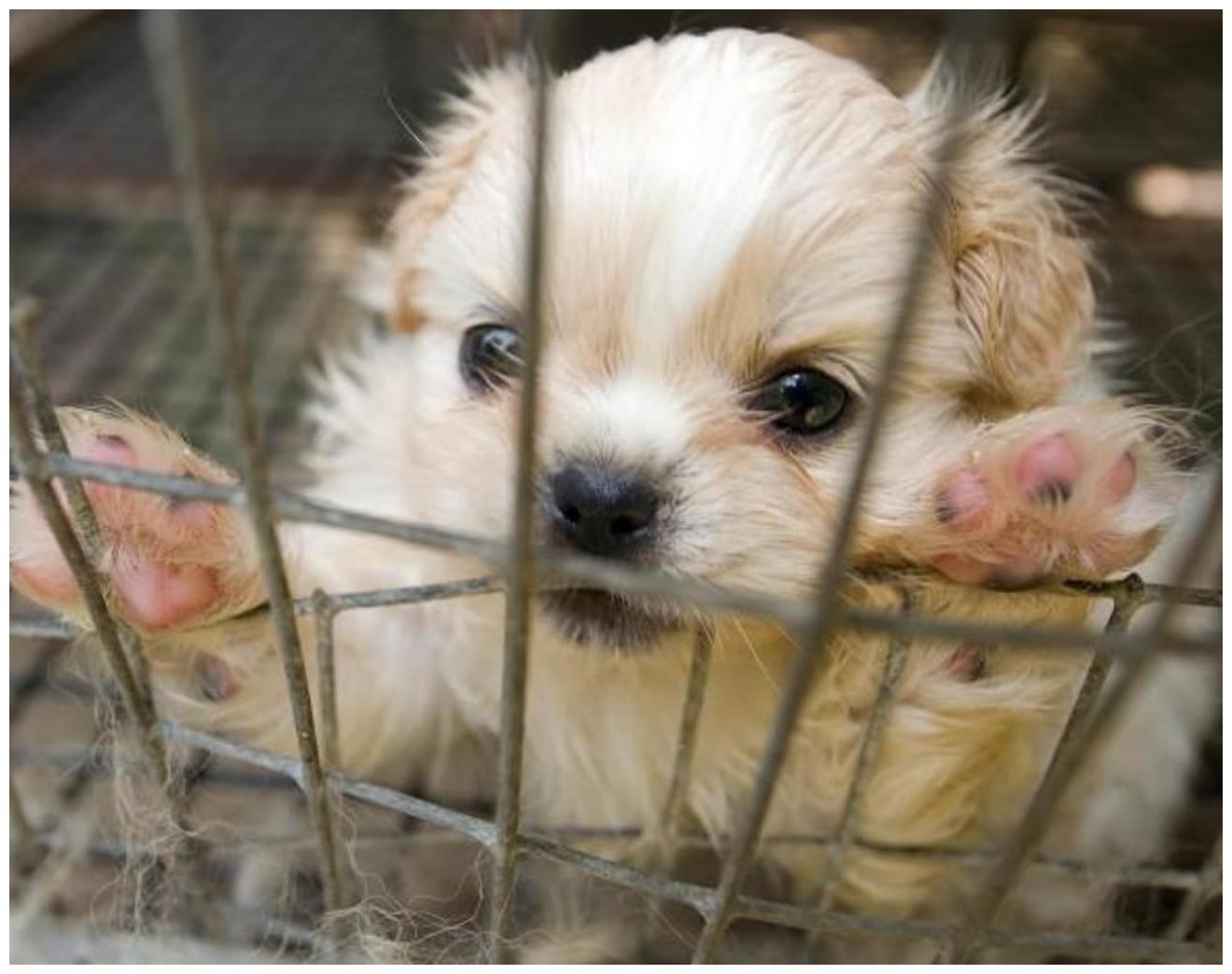
Discover the latest USDA puppy mill reforms and how they’re shaping the future of dog breeding. Learn 7 essential ways to advocate for stronger standards and protect puppies.
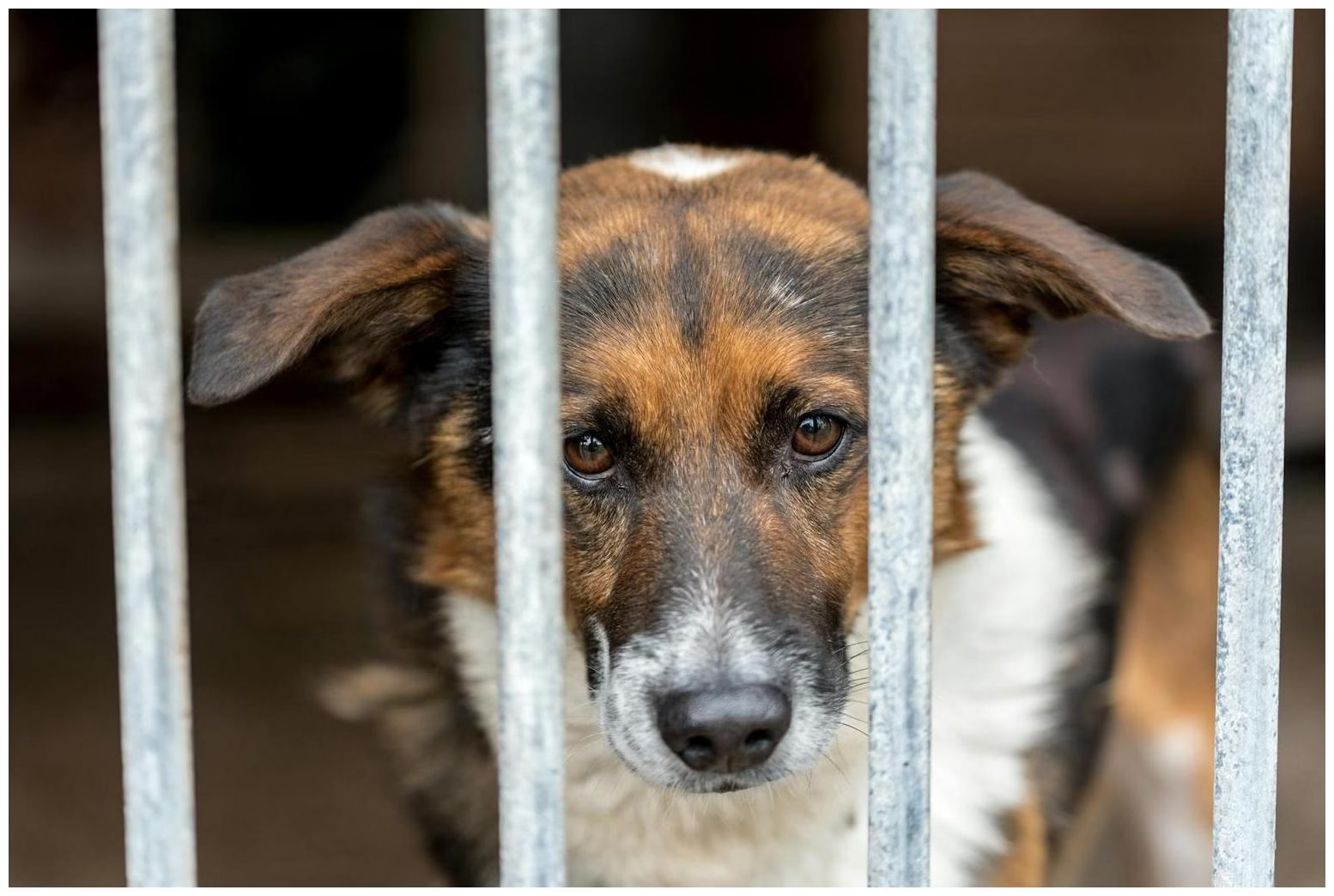
As caring modern dog parents, we all want to ensure our beloved furry friends come from a place of love and care. Yet, the grim reality of commercial dog breeding facilities, often referred to as puppy mills, continues to cast a long shadow over the pet industry. These facilities, driven by profit, frequently prioritize quantity over the health and welfare of animals, leading to widespread suffering. Fortunately, there’s a growing movement towards greater accountability, and the USDA puppy mill reforms are at the heart of this crucial shift.
Have you ever wondered about the origins of a puppy you’ve seen online or in a pet store? The truth can be heartbreaking. Many puppies sold through these channels come from large-scale commercial breeding operations where conditions can be far from ideal. This article will delve into the efforts being made by the USDA and passionate humane advocates to uplift the standards of care for dogs in these commercial breeding facilities, striving for a truly humane world for animals.
Understanding the Need for USDA Puppy Mill Reforms: Why This Matters
The term “puppy mill” evokes images of cramped cages, unsanitary conditions, and neglected animals. Unfortunately, these images are often accurate. Commercial dog breeding facilities, which breed hundreds or even thousands of puppies annually, are regulated by the U.S. Department of Agriculture (USDA) under the Animal Welfare Act (AWA). While the AWA sets minimum standards, humane advocates argue that these standards are often too weak and inadequately enforced, allowing many facilities to operate legally while still subjecting animals to unacceptable conditions.
For you, a devoted dog parent, understanding these issues is critical. The demand for puppies drives the industry, and by being informed, you can make choices that actively support ethical breeding and discourage cruelty. The current push for stronger dog breeding standards is about more than just compliance; it’s about fundamentally changing the way we view and treat animals in commercial settings, ensuring they have access to proper veterinary care, adequate space, and opportunities for socialization.
The USDA’s Current Stance and Proposed Actions on Commercial Dog Breeding Cruelty
The USDA has recently signaled its intention to review and potentially strengthen the regulations governing commercial dog breeders. This move comes after years of persistent pressure from animal welfare organizations and the public, highlighting systemic issues within the industry. The proposed USDA puppy mill reforms aim to address some of the most glaring deficiencies in current standards, seeking to provide clearer guidelines and potentially more robust enforcement mechanisms.
Examining the Scope of Current USDA Regulations for Breeders
Currently, the USDA licenses and inspects commercial breeders who sell puppies wholesale to pet stores or online to consumers. However, these inspections have been widely criticized for being infrequent, often announced in advance, and sometimes lacking the thoroughness needed to identify serious welfare violations. The existing AWA standards cover basic necessities like food, water, shelter, and veterinary care, but critics argue that these minimums are often insufficient to ensure a good quality of life for breeding dogs.
For instance, while a dog must have “adequate” space, the interpretation of “adequate” can vary wildly, leading to dogs living their entire lives in small, wire-bottom cages. The lack of specific requirements for exercise, socialization, and enrichment means that many dogs can suffer from severe psychological and physical health issues, even if a facility is technically “compliant” with existing rules. This is why the proposed USDA puppy mill reforms are so vital—they seek to close these loopholes and raise the bar for animal welfare.
Key Areas Targeted by Recent USDA Puppy Mill Reforms
The recent discussions and proposed changes by the USDA are focusing on several critical areas. These include, but are not limited to, enhancing veterinary care requirements, improving housing conditions, providing more specific guidelines for exercise and enrichment, and strengthening record-keeping to track animal health and welfare more effectively. The goal is to move beyond mere survival and towards a standard that ensures animals are thriving, not just existing. These USDA puppy mill reforms could lead to significant improvements if implemented correctly and with strong oversight.
One particular area of emphasis is the health and welfare of breeding female dogs, who are often exploited for continuous litters, leading to exhaustion and chronic health problems. Stronger regulations could mandate recovery periods between litters, regular health checks, and a cap on the number of litters a female can have. These are the kinds of specific, impactful changes that humane advocates are pushing for to truly transform the commercial dog breeding landscape.
Advocating for Stronger Dog Breeding Standards: The Humane Perspective
While the USDA’s willingness to review its regulations is a positive step, humane organizations believe that the proposed changes don’t go far enough. They are actively advocating for more comprehensive and stringent stronger dog breeding standards that would genuinely protect animals from commercial dog breeding cruelty. These groups often conduct their own investigations, gather data, and lobby lawmakers to implement more robust protections.
Specific Demands from Humane Advocates for Better Care
Humane advocates are calling for specific, measurable improvements. This includes mandatory daily outdoor access for all breeding dogs, not just cramped indoor runs. They push for larger enclosure sizes that allow dogs to stand, turn around, and stretch out fully without touching the sides. Furthermore, requirements for soft bedding, raised platforms, and protection from extreme weather are essential for physical comfort and preventing injuries.
Beyond physical needs, mental well-being is a major concern. Advocates demand requirements for regular, positive human interaction and opportunities for socialization. Proper socialization from an early age is crucial for puppies, and this is often severely lacking in large-scale breeding operations. These advocate humane dog facilities guidelines go far beyond the bare minimums and aim to ensure a truly enriched environment for all dogs.
How Stronger Dog Breeding Standards Address Puppy Mill Cruelty Laws
The ultimate aim of these advocacy efforts is to translate into stronger puppy mill cruelty laws and better enforcement. Current laws often focus on extreme neglect or overt abuse, making it difficult to prosecute facilities that adhere to the letter of the weak AWA standards but still cause immense suffering. By establishing clearer, higher standards, it becomes easier to identify and penalize facilities that fall short, providing real legal teeth to protect animals.
These stronger standards would define acceptable conditions more precisely, reducing ambiguity for inspectors and providing a clearer legal framework for addressing substandard care. The hope is that by raising the bar for licensed breeders, many of the facilities currently operating just above the legal minimums would be forced to significantly improve or cease operations, ultimately reducing the number of dogs subjected to inhumane conditions. These comprehensive humane dog breeding guidelines are essential for lasting change.
Taking Action: How You Can Help End Puppy Mill Cruelties
As a caring dog parent, your choices have power. You are an integral part of the solution in supporting robust USDA puppy mill reforms. By understanding where puppies come from and making informed decisions, you can directly impact the demand for commercially bred dogs and encourage more ethical practices across the industry.
Choosing a Responsible Source: Adopt, Don’t Shop, or Research Diligently
One of the most impactful actions you can take is to adopt a dog from a reputable shelter or rescue organization. These groups save countless lives and do not contribute to the cycle of commercial breeding. If you are set on a specific breed, research breeders meticulously. A responsible breeder will be transparent, invite you to their home to meet the puppy’s parents, provide health clearances, and prioritize the well-being of their dogs over profit.
Supporting Legislation and Advocating for USDA Puppy Mill Reforms
Beyond your personal choices, actively support legislation aimed at strengthening animal welfare laws. Contact your local and federal representatives to express your concern about commercial dog breeding cruelty and your support for more robust USDA oversight. Join animal welfare organizations that are on the front lines, pushing for legislative change and improved humane dog breeding guidelines. Your voice, combined with many others, creates a powerful force for change.
Common Misconceptions About USDA Puppy Mill Reforms
The conversation around USDA puppy mill reforms can sometimes be clouded by misunderstandings. It’s important to differentiate between facts and common myths to effectively advocate for change and understand the nuances of the situation.
Myth: All USDA-Licensed Breeders Are Humane
Unfortunately, this is a dangerous misconception. While licensing suggests a level of oversight, it doesn’t automatically equate to humane conditions. As discussed, the minimum standards can be very low, and enforcement can be inconsistent. A USDA license simply means a facility meets those minimums; it does not guarantee a high standard of care or ethical breeding practices. Many egregious puppy mills operate with a valid USDA license, highlighting the urgent need for stronger standards and better enforcement to ensure truly humane dog facilities.
Myth: Stronger Regulations Will Lead to More “Backyard Breeders”
Some argue that stricter regulations will only drive breeders underground, making it harder to monitor them. However, proponents of stronger USDA puppy mill reforms contend that responsible breeders already exceed the current minimal standards. The aim is to eliminate the inhumane commercial facilities, not small, ethical hobby breeders. In fact, clearer and more robust humane dog breeding guidelines could help educate the public on what constitutes responsible breeding, making it easier to identify and avoid unethical operations, whether they are licensed or not.
Expert Advice: Choosing a Responsible Breeder Beyond USDA Puppy Mill Reforms
Even with strengthened USDA puppy mill reforms, choosing a responsible breeder remains paramount. An ethical breeder will always go above and beyond the minimum legal requirements, ensuring their dogs are healthy, happy, and well-socialized. Here’s what to look for, offering expert advice for every caring modern dog parent.
Key Indicators of a Truly Humane Dog Breeding Facility
- Transparency: A good breeder welcomes visits to their home or facility, allowing you to meet the puppy’s parents and see where the dogs are raised. They should be happy to answer all your questions.
- Health Clearances: They will provide health certifications for the parents, screened for genetic conditions common to the breed. Don’t settle for less.
- Limited Litters: Ethical breeders prioritize the health of their female dogs, spacing out litters and retiring them responsibly.
- Socialization: Puppies should be raised in a stimulating environment, exposed to various sights, sounds, and people to ensure good temperament.
- Contracts and Guarantees: A reputable breeder will have a clear contract, including a health guarantee, and often a spay/neuter agreement.
- Lifetime Support: They will be a resource for you throughout your dog’s life and may require the dog be returned to them if you can no longer care for it.
By keeping these points in mind, you can make an informed decision that supports humane practices and brings a healthy, well-adjusted puppy into your home, irrespective of the ongoing debates around USDA puppy mill reforms.
Conclusion: A Future of Stronger USDA Puppy Mill Reforms for Humane Dog Facilities
The journey towards a truly humane world for animals, particularly for those in commercial breeding facilities, is ongoing. The USDA’s efforts to address puppy mill cruelties are a vital step, but the persistent advocacy for stronger dog breeding standards highlights that there’s still much work to be done. As caring modern dog parents, our awareness and proactive choices play a crucial role in shaping the future of dog welfare. By supporting robust ethical sources for our pets, and speaking up for animals, we can collectively push for a world where every dog is treated with the dignity and care they deserve. Let’s commit to advocating for comprehensive humane dog breeding guidelines and ensuring that commercial dog breeding cruelty becomes a relic of the past.
- Research Before You Adopt: Always investigate the source of your new puppy. If buying from a breeder, ask for references, health clearances for the parents, and insist on visiting the facility in person to see the living conditions and interact with the parent dogs. This helps ensure you’re not inadvertently supporting operations that undermine USDA puppy mill reforms.
- Support Reputable Rescues and Shelters: Consider adopting from local animal shelters or breed-specific rescue organizations. These groups often save dogs from inhumane conditions, including puppy mills, and can offer a healthy, loving companion without contributing to commercial breeding. You’ll give a deserving dog a second chance at a happy life. Consider supporting reputable shelters or rescue organizations to help dogs in need.
- Educate Your Network: Share information about puppy mills and the importance of responsible pet acquisition with friends and family. Many people are unaware of the cruelties involved or the implications of buying from pet stores or online sources that work with puppy mills. Informed consumers drive demand for humane dog breeding guidelines.
- Advocate for Stronger Legislation: Contact your local, state, and federal representatives to express your concern about commercial dog breeding cruelty and your support for more robust USDA oversight. Your voice can help push forward meaningful changes and strengthen USDA puppy mill reforms.
- Donate to Animal Welfare Organizations: Financial support or volunteering your time to organizations dedicated to fighting puppy mills can make a significant difference. These groups conduct investigations, rescue animals, and lobby for stronger protections. Every contribution helps in the fight for humane dog facilities.
- Be Wary of Online Sales: While many legitimate breeders operate online, the internet is also a breeding ground for unethical puppy sellers. Be extremely cautious of websites that offer multiple breeds, promise immediate delivery, or refuse in-person visits. Always verify credentials and insist on seeing the parents.
- Understand ‘Minimum Standards’: Remember that a USDA license only guarantees a breeder meets *minimum* federal standards, which are often criticized as inadequate. Aim for breeders who far exceed these minimums, demonstrating a genuine commitment to animal welfare beyond mere compliance with USDA puppy mill reforms.
- Report Suspected Cruelty: If you suspect a commercial breeding facility is operating under inhumane conditions or violating animal welfare laws, report it to local animal control, state authorities, or the USDA. Document everything with photos, videos, and detailed notes to aid investigations into puppy mill cruelty laws.
- Consider Older Dogs: While puppies are adorable, don’t overlook the joys of adopting an older dog. Many adult dogs, including those rescued from breeding operations, are looking for loving homes and come with established personalities and often some training, avoiding the initial chaos of a puppy.
- Support Transparency: Look for breeders who are completely transparent about their practices, including showing you vet records, health clearances, and providing references from previous puppy buyers. Transparency is a hallmark of an ethical operation dedicated to humane dog breeding guidelines.
