
Can I Pet That Dog? Can I Pet This Dog? Is It Okay To Pet That Dog? Learn the crucial etiquette & safety tips for interacting with unfamiliar dogs. Avoid awkward situations & ensure a positive experience for both you & the pup!
Can I Pet That Dog? A Comprehensive Guide to Approaching Dogs Safely
Approaching a dog you don’t know can be a nerve-wracking experience. The question, “Can I pet that dog?” is one many dog lovers, and even seasoned dog owners, grapple with. This comprehensive guide will help you understand canine body language, navigate tricky situations, and ultimately determine whether it’s appropriate to offer a friendly pat. We’ll cover everything from recognizing signs of a comfortable dog to understanding why some dogs may not appreciate unsolicited attention.
Can I Pet That Dog? Understanding Canine Body Language
Before even considering petting a dog, you must learn to read its body language. A dog’s communication is primarily non-verbal, and misinterpreting these signals can lead to unpleasant, even dangerous, encounters. A wagging tail, often seen as an unequivocal sign of happiness, can actually indicate stress or anxiety depending on the context. Likewise, a dog that appears relaxed might suddenly show signs of discomfort.
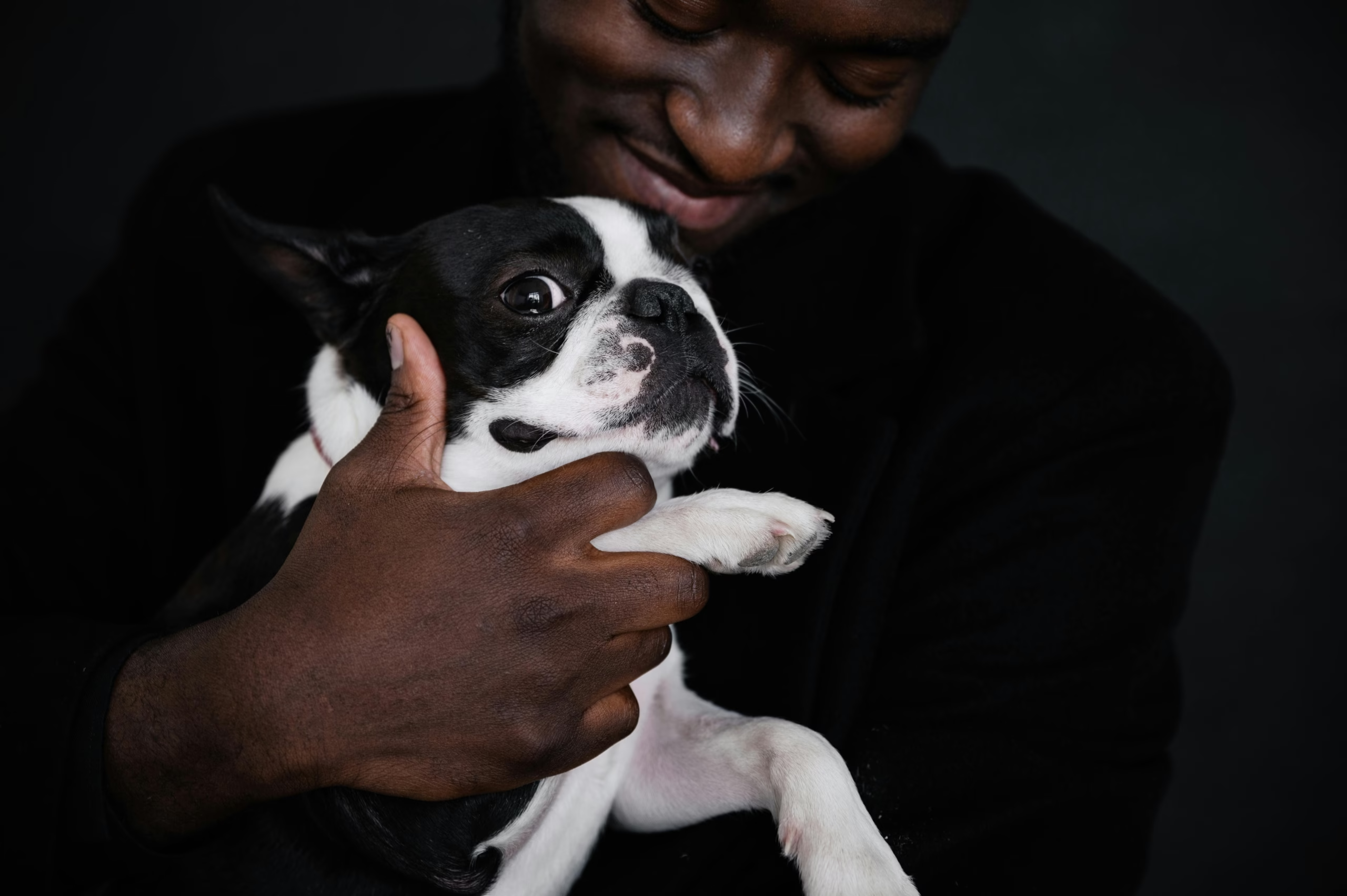
Some key indicators of a dog’s comfort level include relaxed posture, a soft, loose mouth, and gentle, slow tail wags. Conversely, signs of stress or fear include stiff body posture, tucked tail, whale eye (showing the whites of their eyes), yawning, lip licking, and growling. If you notice any of these signs, the answer to “Can I pet that dog?” is a resounding no. Remember, respecting a dog’s boundaries is paramount.
A dog’s breed also plays a role. While some breeds are known for their friendly demeanor, it’s crucial to remember that individual personalities vary greatly within any breed. For example, a particularly friendly Golden Retriever might still prefer not to be petted if it’s tired or feeling overwhelmed. Never assume a dog’s temperament based on its breed alone.
Can I Pet the Dog? Approaching a Dog Safely: A Step-by-Step Guide
If a dog appears relaxed and approachable, there’s a way to respectfully interact. Following these steps can help you avoid an unwanted encounter and help determine whether that dog is open to a pet:
Ask the Owner: The simplest and safest approach is to ask the owner, “Can I pet your dog?” This shows respect for both the dog and its human companion. The owner can assess their dog’s mood and comfort level, providing the best insight into whether a pet is appropriate.
Observe from a Distance: Before approaching, observe the dog from a distance. Note its body language, as discussed above. Look for signs of relaxation, such as a loose posture, soft eyes, and a relaxed tail.
Extend Your Hand Slowly: If the dog appears comfortable, slowly extend your hand, palm down, towards its chest, rather than its head. Allow the dog to sniff your hand first. This gives the dog control over the interaction.
Gentle Petting: If the dog accepts your hand, gently pet it under the chin or on the chest. Avoid petting the head initially, as this can be seen as invasive by some dogs.
Respect the Dog’s Response: Always pay close attention to the dog’s response. If it pulls away, stops sniffing, or shows any signs of discomfort, immediately stop petting it and give it space. Respecting its signals is crucial. If the dog seems wary, it might help to read more about the development of canine teeth – you can find helpful info at When do Canine Teeth Erupt in the Horse. While seemingly unrelated, understanding a dog’s development can help you understand their potential sensitivities.
Is it Okay to Pet That Dog? Considering the Environment
The environment also plays a significant role in determining whether it’s okay to approach a dog. A dog that’s happily playing in a park might react differently than a dog that’s resting in a busy store. If a dog is clearly focused on something else, like eating, sleeping, or interacting with another animal, it’s best to leave it alone. Also, avoid approaching a dog that’s restrained, such as one on a leash being held by an owner who seems tense or stressed. Their reactions are often a reflection of the human they are with. Knowing more about the effects of canine carry-outs on dogs can also help understand a dog’s overall wellbeing, influencing whether they’re in a receptive mood for petting.
Is it Okay to Pet That Dog? Children and Dogs: A Special Case
Children often lack the understanding of canine body language required to safely interact with dogs. Supervise children around dogs at all times. Teach them the importance of asking before petting and respecting a dog’s boundaries. Explain that even a friendly dog may bite if it feels threatened or overwhelmed, especially if it’s a young dog and its canine teeth are not fully developed. Learning about how to make your canine teeth less sharper is important for dog owners, but not relevant to interacting with unfamiliar dogs, as your focus should be on their behaviour and not their teeth.
Can I Pet That Dog? Dealing with Aggressive Behaviour
While most dogs are friendly, some may exhibit aggressive behaviour. If a dog shows signs of aggression, such as growling, showing teeth, or lunging, immediately move away slowly and give the dog plenty of space. Avoid making direct eye contact, as this can be perceived as a challenge. Never run, as this might trigger a chase response.
Understanding the reasons behind canine aggression can help prevent future encounters. Factors such as fear, pain, and territoriality can all contribute to aggressive behavior. Interestingly, some of the most aggressive predators have fascinating dental features; for example, consider the predator with the largest canine teeth. While it might seem irrelevant to dog behaviour, studying extreme examples can provide perspective on the importance of understanding canine communication in general.
Beyond the Question: Can I Pet That Dog? Responsible Dog Ownership
Ultimately, the question, “Can I pet that dog?” should be guided by respect, observation, and awareness of canine body language. It’s important to remember that dogs are individuals with their own needs and preferences. Responsible dog ownership involves understanding these complexities and ensuring the safety and well-being of both dogs and humans.
For further insights into responsible dog ownership and canine behavior, consider consulting these additional resources:
- The American Veterinary Society of Animal Behavior: Provides valuable information on canine behavior and aggression.
- The American Kennel Club: Offers resources on various dog breeds and their temperaments.
Share Your Experiences!
We’ve explored the intricacies of interacting with dogs and answered the crucial question, “Can I pet that dog?” Now, we want to hear from you. Share your experiences approaching unfamiliar dogs in the comments below! Have you had positive or negative interactions? What strategies have you found most effective in determining whether a dog is open to being petted? Let’s learn from each other’s experiences and contribute to a more responsible and understanding approach towards canine interactions.
Frequently Asked Questions: Can I Pet That Dog?
1. Can I pet that dog? How can I tell if it’s okay?
Approaching a dog you don’t know requires caution. Body language is key. A relaxed dog will likely have a loose, wagging tail, soft eyes, and a playful posture. A tense dog might show signs of stress like tucked tail, whale eye (showing the whites of their eyes), stiff body, or growling. If you’re unsure, always ask the owner “Can I pet your dog?” before approaching. If they say no, respect their wishes. Learning to read canine body language is crucial for determining if ‘Can I pet that dog?’ is a question you should even ask.
2. Is it okay to pet that dog if it’s on a leash?
Even if a dog is on a leash, it doesn’t automatically mean it’s okay to pet it. The owner might still be uncomfortable with strangers interacting with their pet. Always ask “Can I pet the dog?” before reaching out, regardless of whether it’s leashed or not. Remember, a dog’s reaction might be unpredictable, so it’s always better to be safe than sorry.
3. Can I pet that dog if it’s running towards me?
A dog running towards you is not always an invitation for petting. It might be friendly, or it could be protective or playful. Never assume. Let the dog approach you slowly and assess its body language. If it’s overly excited or showing signs of aggression, avoid petting. “Can I pet that dog?” isn’t a question to ask in this scenario; it’s about understanding the dog’s behavior first.
4. What if the dog is lying down? Can I pet it then?
Even a dog lying down might not want to be petted. A dog lying down could be sleeping, resting, or conserving energy – any of which may be disrupted by petting. Look for signs of relaxation before approaching. It’s always best to ask the owner “Is it okay to pet that dog?”
5. My child wants to pet the dog. How do I teach them to ask politely?
Teach your children to always ask the owner “Can I pet the dog, please?” before reaching out. Emphasize the importance of respecting personal space and observing the dog’s body language. Explain that a dog might not always want to be petted, even if it looks friendly. And of course, never leave a child unsupervised around any dog.
6. Can I pet a dog if it’s eating?
Never approach or pet a dog while it’s eating or guarding its food. This is a very common reason for a dog to bite. Food aggression is serious, and it’s crucial to understand that “Can I pet the dog?” is the wrong question when they’re protecting their food.
7. The dog seems friendly, but its teeth look sharp. Should I still pet it?
A dog’s teeth, regardless of apparent sharpness (learn more about canine teeth at when do canine teeth erupt in the horse), are a natural part of their anatomy. Even a friendly dog might bite if startled or feels threatened. Sharp or not, always prioritize a dog’s comfort and ensure they’re relaxed before attempting to pet them. Learn more about canine teeth.
8. What if the owner says no?
Respect the owner’s decision if they say no to you petting their dog. It’s their dog, and they have the right to decide who interacts with it. There can be several reasons for their refusal, and you should always respect their answer.
9. Are there any breeds I should be extra cautious around?
While any dog can bite, certain breeds have a higher perceived risk due to their size and strength. However, this is a generalization. Always assess the dog’s individual behavior before approaching, regardless of breed. Never assume “Can I pet that dog?” simply because of its breed.
10. Can I pet the dog if it’s in a park without an owner?
Never approach and pet a dog without its owner present. Stray dogs might be scared, aggressive, or sick. Always err on the side of caution. You should never assume ‘Can I pet that dog?’ in this circumstance. Additionally, consider what predator has the largest canine teeth to appreciate the bite force even a seemingly small dog can possess. Remember safety is paramount.

Can I Pet That Dog? A Guide to Safe Interactions
Approaching and interacting with dogs requires awareness and caution. While many dogs are friendly, understanding canine behavior and potential risks is crucial for both your safety and the dog’s well-being.
Assessing the Situation: Before You Pet
Before you reach out to pet a dog, carefully assess the situation. Consider these factors:
- The Dog’s Body Language: Is the dog relaxed and approachable, or showing signs of stress or aggression? A stiff body, tucked tail, whale eye (showing the whites of their eyes), growling, or snapping are all warning signs. Respect the dog’s space if it displays any of these behaviors.
- The Owner’s Presence: Is there an owner present? If so, always ask for permission before petting their dog. They can offer valuable insights into the dog’s temperament and any potential issues, such as a fear of strangers or a tendency to bite. They may also be able to help manage the interaction.
- The Environment: Is the dog in a confined space, like a car or crate? Is it restrained? Approaching a dog in such circumstances can be stressful for both the animal and yourself. It’s best to avoid interaction in these situations.
Understanding Canine Teeth: A Factor in Safety
While a friendly dog’s playful nips might seem harmless, it’s important to understand canine teeth. Even a small nip can cause injury. Understanding their development can help you appreciate potential risks. For example, you might wonder about the timing of their development. When do canine teeth erupt in a dog? Learning more about the process, from when canine teeth erupt in the horse (though different from dogs, it provides context on canine tooth development), to when do canine teeth fall out, is helpful. And if a dog does nip, you might be interested in learning how to minimize the sharpness. Check out this article on how to make your canine teeth less sharper (note: this focuses on dogs).
Health Considerations: Zoonoses and Hygiene
Remember that dogs can carry diseases. Always wash your hands thoroughly after interacting with a dog, especially if you have any open wounds. Be mindful of potential zoonoses—diseases that can be transmitted from animals to humans.
Responsible Dog Ownership and Canine Treats: An Indirect Connection
While not directly related to petting, responsible dog ownership plays a vital role in canine health and behavior. Providing a balanced diet and appropriate exercise are critical factors. This includes being mindful of treats. Consider learning more about are canine carry-outs good for dogs, as responsible treat choices are part of responsible ownership. A well-cared-for dog is more likely to be well-behaved and less prone to aggression. Finally, a curiosity about canine biology might extend to other animals. For instance, you might want to learn more about what predator has the largest canine teeth.
In Summary: Prioritize Safety and Respect
Approaching and petting a dog should always be a respectful and cautious interaction. Observe the dog’s body language, ask for permission from the owner if present, and prioritize your safety and the well-being of the animal. Remember to wash your hands afterward.
Can I Pet That Dog,Can I Pet This Dog,Is It Okay To Pet That Dog