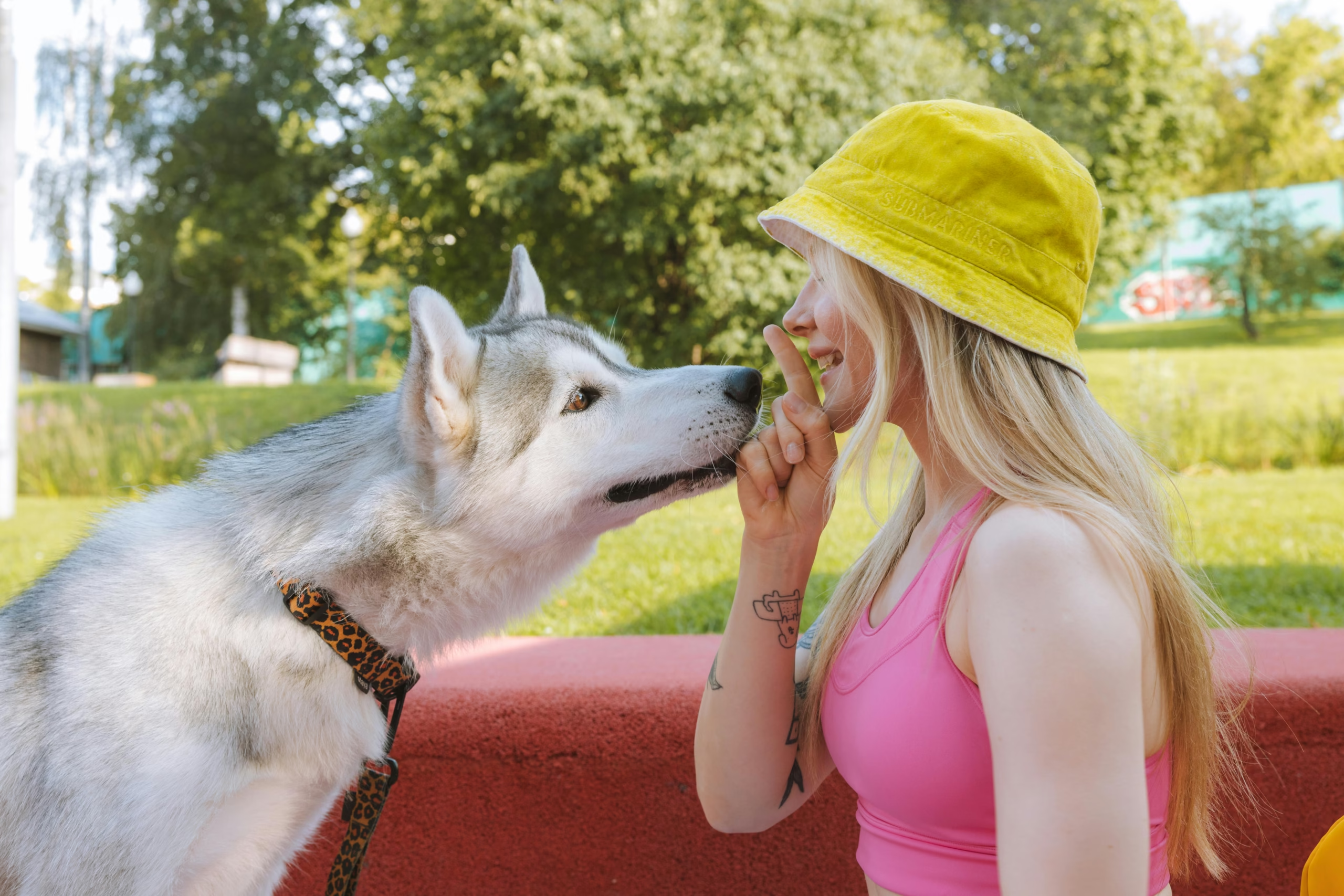
How Big Do Hound Mixes Get? Find out with our helpful Hound Mix Size Chart! Discover the adult Hound Mix size range and plan for your furry friend’s future needs.
How Big Do Hound Mixes Get? A Comprehensive Guide to Hound Mix Size
Determining the adult size of a hound mix can be tricky, as it depends on the specific breeds involved in the mix. Unlike purebred dogs with predictable genetics, mixed breeds inherit traits from multiple ancestors, leading to a wide range of possible sizes. This comprehensive guide will explore how big do hound mixes get, providing insights into predicting your hound mix’s adult size, understanding adult hound mix size, and using a hound mix size chart as a helpful, albeit imperfect, tool.
Understanding the Variability in Hound Mix Size
The beauty and sometimes the challenge of hound mixes lie in their genetic diversity. Hounds themselves come in various sizes, from the petite Beagle to the towering Bloodhound. When you add the complexities of mixed breeding, predicting the size of your puppy becomes a bit like solving a canine puzzle. A mix involving a Great Dane and a Beagle will clearly result in a much larger dog than one combining a Basset Hound and a smaller scent hound. Even within the same mixed breed combinations, individual puppies can vary significantly.
This inherent variability means that focusing solely on breed percentages might not provide an accurate prediction of your puppy’s final size. While knowing the parent breeds is helpful, remember it’s only one piece of the puzzle. Other factors, such as genetics from further back in the lineage and overall nutrition, play a significant role.
Factors Affecting Hound Mix Size: Beyond the Breeds
Several factors contribute to the final size of your adult hound mix, beyond simply knowing the parent breeds. These include:
- Genetics: This is the biggest factor. Even if you know both parent breeds, the puppy may inherit genes for size from grandparents, great-grandparents, or even further back in its lineage. Predicting the exact combination is impossible.
- Nutrition: A puppy fed a balanced diet with all the necessary nutrients will grow to its full potential. Malnutrition can stunt growth, resulting in a smaller adult dog.
- Health: Underlying health issues can impact a puppy’s growth. Regular veterinary checkups are crucial to ensure your pup is healthy and growing properly. Vaccinations, such as the crucial Canine DHPP vaccine (https://pupquotes.com/blog/what-is-canine-dhpp-vaccine/) and Canine Bordetella vaccine (https://pupquotes.com/blog/what-is-canine-bordetella-vaccine/), are essential for overall well-being, and contributing to healthy development.
- Sex: Generally, male dogs tend to be larger than female dogs of the same breed mix.
How Big Do Hound Mixes Get? Using a Hound Mix Size Chart
While no hound mix size chart can guarantee perfect accuracy, they can serve as a useful guideline. These charts usually categorize hound mixes by parent breed and provide a range of expected adult weights and heights. It’s crucial to remember these are just estimations. Think of them as providing a general idea, not a precise prediction. You can often find these charts online, but treat the information cautiously.
Remember that a chart showing the average adult size for Beagle mixes will provide a different range than a chart for Bloodhound mixes. The diversity is vast!
Adult Hound Mix Size: Predicting Your Puppy’s Future
Predicting adult hound mix size involves a combination of factors. Observing the puppy’s growth rate during the first few months is helpful. Rapid growth in the early stages often suggests a larger adult dog. However, this is not a foolproof method.
Consulting with a veterinarian is always recommended. They can assess your puppy’s health, monitor growth, and provide a more informed estimation based on your dog’s breed mix and overall health. They’ll also be able to address any concerns about your puppy’s development and ensure they are meeting crucial milestones.
Case Studies: Examples of Hound Mix Size Variation
Consider these examples of the size variation in hound mixes:
- Beagle/Basset Hound Mix: These mixes are usually medium-sized, but can vary widely depending on the specific genetics inherited. Some might reach 25 pounds, while others could be closer to 40.
- Bloodhound/Labrador Retriever Mix: These mixes will likely be large dogs, perhaps even bordering on giant. Their size could range from 60 to 100 pounds.
- Greyhound/Chihuahua Mix: This is an example of the extreme variation possible. One parent is a giant breed, and the other a toy breed. The resulting adult dog could range from a small to medium size.
Addressing Common Concerns About Hound Mix Size
Many owners worry about whether their hound mix will be too big or too small for their lifestyle. Planning ahead is crucial. Consider your living space, lifestyle, and ability to handle a large or small dog before acquiring a hound mix puppy. It’s much easier to adjust to a dog’s size than to try and undo it later.
Remember that even if your hound mix ends up being larger or smaller than anticipated, the love and companionship you share will be the most important aspect of your relationship.
Beyond Size: Understanding Your Hound Mix’s Needs
While size is an important consideration, it’s only one piece of the puzzle. Understanding the temperament, energy levels, and health predispositions of the parent breeds is crucial. A large, energetic hound mix will require more exercise and mental stimulation than a smaller, calmer mix. Knowing these aspects will help you to provide your furry friend with a happy and fulfilling life.
Consider the potential need for training: A canine resort (https://pupquotes.com/blog/a-country-canine-resort/) might be a good option for socialization and training to ensure your dog is well-adjusted, regardless of its size.
Remember to discuss canine teething (https://pupquotes.com/blog/when-do-canine-teeth-fall-out/) with your veterinarian, as this stage often coincides with periods of rapid growth.
Are bears even in the canine family? (https://pupquotes.com/blog/are-bears-in-the-canine-family/) The answer is no, of course, but the question highlights how much variation exists in the animal kingdom!
Conclusion: Embracing the Mystery of Hound Mix Size
Predicting the exact adult hound mix size is challenging. While tools like hound mix size charts offer a general guideline, they cannot provide definitive answers. The interaction of multiple genetic factors, nutrition, and health influences the final size. Embrace the mystery and focus on providing your hound mix with a loving, supportive, and healthy environment.
Share your experiences with your hound mix’s growth in the comments below! Tell us about your puppy’s development and how close the predictions were to the final adult size. What breed mix do you have, and what size did your dog reach? Use the keywords like how big do hound mixes get, hound mix size chart, and adult hound mix size in your comment.
External Links:
- American Kennel Club (AKC): [Insert relevant AKC link about mixed breeds or dog growth] – Provides information on various dog breeds and their characteristics.
- Veterinary Partner: [Insert relevant Veterinary Partner link on puppy growth or canine health] – Offers reliable information on canine health and development from veterinary professionals.
- PetMD: [Insert relevant PetMD link on dog breeds or growth charts] – Provides extensive information on dog health, breeds, and related topics.

Frequently Asked Questions: How Big Do Hound Mixes Get?
1. How big do hound mixes get?
The size of an adult hound mix varies greatly depending on the breeds mixed. There’s no single answer to “How Big Do Hound Mixes Get?”. A mix involving a Beagle and a Dachshund will be significantly smaller than a mix of a Bloodhound and a Great Dane. To get a better idea, consider looking at a Hound Mix Size Chart that compares parent breeds and their typical adult sizes. This will give you a range of possibilities.
2. Is there a Hound Mix Size Chart available?
Unfortunately, there isn’t one definitive Hound Mix Size Chart because of the huge variety in hound mixes. However, you can find helpful resources online that list the average sizes of different hound breeds. By knowing the parent breeds, you can get a reasonable estimate of your dog’s Adult Hound Mix Size.
3. My hound mix puppy is small, will it stay small?
Not necessarily. Many hound mixes experience significant growth spurts during their first year. While you can use a Hound Mix Size Chart for a general idea, wait until your puppy is at least 1 year old to get a more accurate prediction of their Adult Hound Mix Size.
4. What factors affect a hound mix’s adult size?
Genetics plays the biggest role. The size of the parent breeds heavily influences the Adult Hound Mix Size. Nutrition also plays a part; proper feeding during puppyhood can impact their final size, but generally won’t dramatically change a dog’s genetics. It is important to consult your vet for guidance on proper puppy nutrition.
5. How can I estimate my hound mix’s adult size?
Compare the sizes of the likely parent breeds. Many online resources provide breed-specific size information. Keep in mind this is just an estimate; the actual Adult Hound Mix Size could vary. Regular vet checkups are important for monitoring growth and addressing any health concerns, especially for canine diseases like those preventable by vaccinations such as the canine DHPP vaccine or the canine Bordetella vaccine.
6. My hound mix is much larger than I expected. Is this normal?
While unexpected, it’s not unheard of. The genetics of mixed breeds can be unpredictable. It’s always best to check with your vet if you’re concerned about your dog’s growth, especially if it appears unusually rapid. Remember, a well-cared for canine can thrive in a suitable environment, just like those at a country canine resort.
7. Are there any health concerns specific to large hound mixes?
Larger breeds, regardless of mix, can be prone to certain health issues like hip dysplasia. Regular vet checkups are crucial for early detection and management of potential problems. Understanding your dog’s breed components helps you understand potential health concerns and how to proactively address them. Sometimes even seemingly unrelated issues like canine tooth development (when do canine teeth fall out) can give insight into their growth trajectory.
8. What if I can’t determine the parent breeds of my hound mix?
If you adopted your dog and don’t know the parent breeds, estimating the Adult Hound Mix Size becomes more challenging. Observe your dog’s growth over time and consult your veterinarian for guidance. They may be able to provide insights based on your dog’s physical characteristics and growth pattern.
9. Does spaying/neutering affect the size of a hound mix?
Spaying or neutering generally doesn’t significantly affect the Adult Hound Mix Size, though some anecdotal evidence suggests a slightly smaller size in some cases. The impact is minimal compared to genetics.
10. My hound mix seems to be growing too slowly. Should I be worried?
Slow growth can be a sign of underlying health issues. It’s important to consult your veterinarian to rule out any problems. They can assess your dog’s health, determine the cause of slow growth, and guide you on the best course of action. Remember, even seemingly unrelated questions, like “Are bears in the canine family?” can highlight the diversity of the canine world and how individual breeds are unique.

How Big Do Hound Mixes Get? A Guide to Size and Health
Determining the adult size of a hound mix can be tricky, as it depends heavily on the breeds involved in its lineage. There’s no single answer, but understanding the potential size range is crucial for responsible pet ownership. This guide provides practical tips and health considerations.
Predicting Adult Size
The best way to estimate your hound mix’s adult size is to understand the parent breeds. If you know the parents, research their average adult weights and heights. A larger breed parent will likely result in a larger dog. However, genetics are complex; some mixes might lean towards one parent’s size more than the other. Keep in mind this is just an estimate.
Your veterinarian can also offer guidance based on your puppy’s growth trajectory. Regular check-ups are essential, not just for size prediction but for overall health. These visits will help ensure your dog receives the necessary vaccinations, such as the Canine DHPP vaccine [https://pupquotes.com/blog/what-is-canine-dhpp-vaccine/] and the Canine Bordetella vaccine [https://pupquotes.com/blog/what-is-canine-bordetella-vaccine/], protecting against common canine diseases.
Health Considerations Based on Size
Larger hound mixes generally have a slightly shorter lifespan than smaller breeds. They are also prone to certain health issues related to their size and breed predispositions. These can include hip and elbow dysplasia, joint problems, and certain heart conditions. Early detection is key; regular veterinary check-ups are paramount.
Housing and Lifestyle Adjustments
The size of your hound mix dictates their housing and lifestyle needs. A large dog needs more space than a small one. Consider your living space, whether you have a yard, and your lifestyle when choosing a dog. Are you prepared for the physical demands of caring for a large, energetic breed? Maybe a stay at a country canine resort [https://pupquotes.com/blog/a-country-canine-resort/] could be beneficial if you need a break occasionally.
Nutritional Needs
Larger dogs require a higher caloric intake to support their growth and maintain a healthy weight. Providing appropriate nutrition is essential for healthy bone and joint development. Consult your veterinarian for recommendations on diet and feeding schedules specific to your dog’s size, breed, and age.
Dental Health
Regardless of size, dental health is crucial. Remember, it’s not just about when do canine teeth fall out [https://pupquotes.com/blog/when-do-canine-teeth-fall-out/], but about maintaining good oral hygiene throughout your dog’s life. Regular brushing and professional dental cleanings are recommended.
Important Note: Hound Mixes are Diverse!
While we’ve discussed general guidelines, remember hound mixes are extremely diverse. A mix of a Beagle and a Greyhound will differ significantly from a Bloodhound and Great Dane mix! Thorough research on the potential parent breeds is vital for realistic expectations and responsible ownership. Just for fun, let’s remember that dogs, unlike bears [https://pupquotes.com/blog/are-bears-in-the-canine-family/], are in the canine family, sharing many characteristics.
By considering these factors, you can better prepare for the arrival and lifelong care of your hound mix, ensuring a happy and healthy life together.
How Big Do Hound Mixes Get, Hound Mix Size Chart, Adult Hound Mix Size