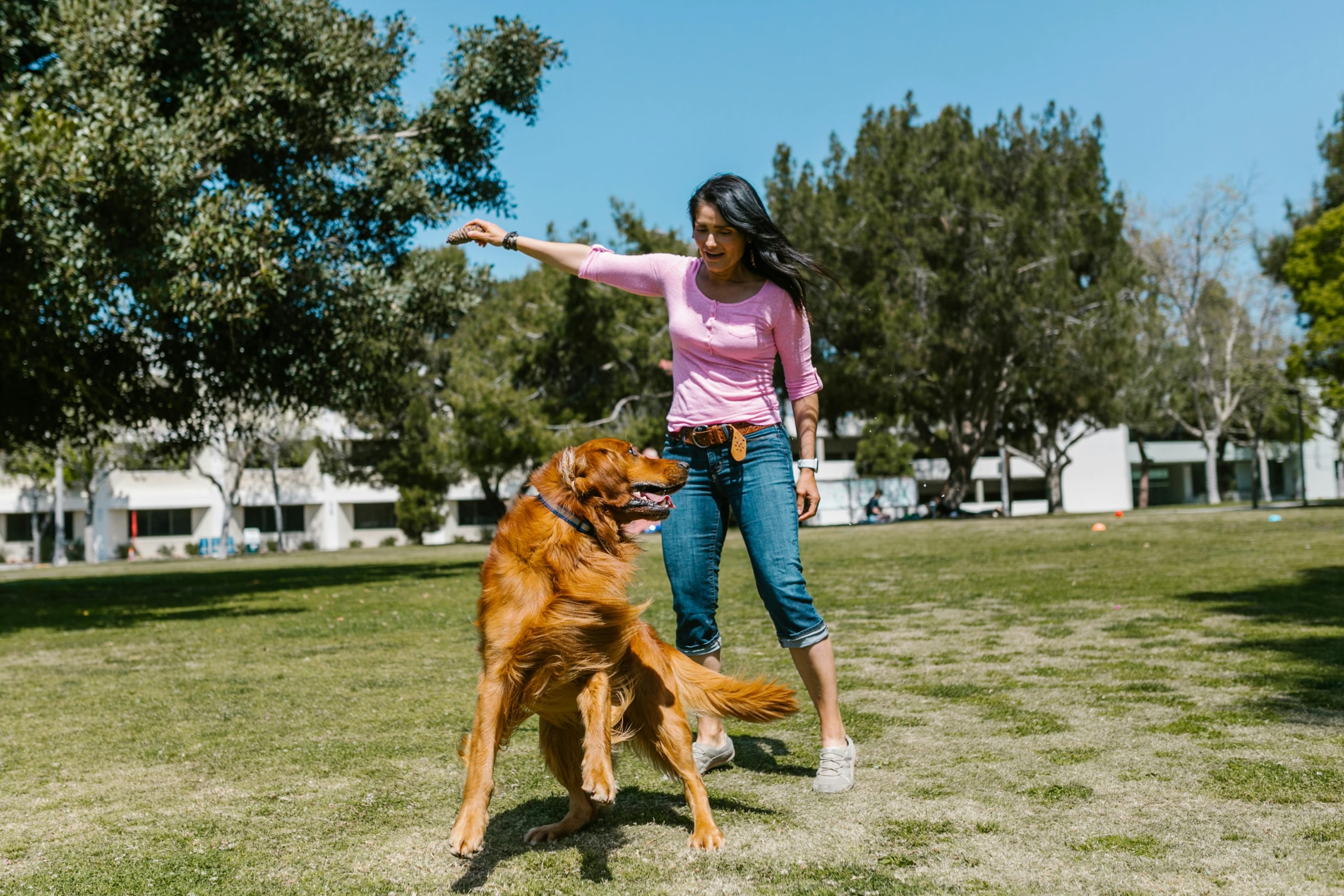
When Can A Puppy Leave Its Mother? Find out the ideal puppy weaning age & when to separate puppy from mother. Learn crucial tips for a healthy transition! Get expert advice now.
When Can A Puppy Leave Its Mother? A Comprehensive Guide
Determining the ideal time for a puppy to leave its mother is crucial for its health and well-being. While there’s no single magic number, understanding the developmental stages of puppies, particularly Puppy Weaning Age, and the importance of maternal bonding helps responsible breeders and new pet owners make informed decisions. This article delves into the critical factors determining when can a puppy leave its mother, ensuring a smooth transition for both the puppy and its mother.
How Long Should A Puppy Stay With Its Mother? The Importance of Early Socialization
The length of time a puppy should stay with its mother isn’t just about physical development; it’s profoundly about socialization and emotional well-being. Puppies learn crucial social skills from their littermates and mother during their early weeks. This includes bite inhibition (learning how hard to bite without hurting), appropriate play behavior, and basic communication skills. Separating a puppy too early can lead to behavioral problems later in life, such as aggression, anxiety, and fear.
A common misconception is that puppies are ready to leave as soon as they are weaned. While Puppy Weaning Age is a significant milestone, it’s only one piece of the puzzle. Weaning typically begins around 3-4 weeks of age, when puppies start to show interest in solid food. However, they still rely heavily on their mother’s milk for essential nutrients and antibodies for several more weeks.
When Can A Puppy Leave Its Mother? A Timeline of Development
Ideally, puppies should stay with their mothers until at least 8 weeks of age. This allows sufficient time for vital socialization and the completion of crucial developmental milestones. This eight-week mark is a minimum guideline, and some experts recommend extending this period even further, especially for smaller breeds or puppies who show signs of needing more time.
Between weeks 3 and 8, puppies undergo remarkable changes. They are weaned fully, start exploring their environment more, play more intensely with their littermates, and begin to develop their individual personalities. They also start receiving important vaccinations, such as the Canine DHPP vaccine (learn more about its importance at https://pupquotes.com/blog/what-is-canine-dhpp-vaccine/), Canine Bordetella vaccine (https://pupquotes.com/blog/what-is-canine-bordetella-vaccine/), and the Canine Distemper vaccine (https://pupquotes.com/blog/what-is-the-canine-distemper-vaccine/), which offer crucial protection against various diseases. These vaccinations require multiple doses spread out over several weeks, further underscoring the need for a minimum eight-week stay with the mother.
By 8 weeks, the puppies have learned considerable bite inhibition, have developed reasonably good social skills, and their immune systems have received a significant boost from their mother’s milk and vaccinations. Their teeth, including their canine teeth (learn more about when canine teeth erupt in dogs at https://pupquotes.com/blog/when-do-canine-teeth-erupt-in-the-horse/ and when they fall out at https://pupquotes.com/blog/when-do-canine-teeth-fall-out/), are also developing properly.
Factors Influencing the Ideal Time
While 8 weeks is a general guideline, some factors can influence the best time for a puppy to leave its mother:
- Breed: Smaller breeds might benefit from staying with their mother a little longer than larger breeds.
- Individual Puppy Development: Some puppies develop more slowly than others. A responsible breeder will monitor each puppy’s progress and make an individual assessment.
- Health: Any health concerns should be addressed before the puppy leaves its mother.
- Litter Size: Large litters might necessitate a slightly longer period with the mother due to increased competition for resources and potentially slower individual development.
Signs of Readiness: Beyond the Eight-Week Mark
While the 8-week mark is a helpful benchmark, several signs indicate readiness for separation:
- Confidence and Independence: The puppy explores its environment confidently, is comfortable being away from its littermates for short periods, and displays a sense of independence.
- Solid Food Consumption: The puppy is eating solid food readily and isn’t reliant on their mother’s milk.
- Appropriate Elimination: The puppy is consistently eliminating outside.
- Social Skills: The puppy interacts appropriately with its littermates and humans, showing good bite inhibition.
The Impact of Early Separation
Early separation from the mother and littermates can lead to several problems:
- Behavioral Issues: Lack of proper socialization can result in fearfulness, aggression, and anxiety.
- Health Problems: Early weaning can lead to nutritional deficiencies and increase the risk of illness.
- Emotional Distress: Puppies separated too early can experience emotional distress, impacting their long-term well-being.
What to Expect After Separation
The transition to a new home can be stressful for a puppy. A gradual introduction to the new environment, consistent training, and plenty of love and patience are essential to help the puppy adjust.
Ensuring a smooth transition also involves proper veterinary care. Continuing the vaccination schedule is critical, and regular checkups are important to monitor the puppy’s health.
Conclusion: Prioritizing Puppy Well-being
Understanding when can a puppy leave its mother is a crucial aspect of responsible pet ownership. While an 8-week minimum is a valuable guideline, responsible breeders prioritize the individual needs of each puppy and ensure they are developmentally ready for separation. By considering the factors outlined above, and by ensuring a smooth transition to a loving and supportive home, you can help your new puppy thrive.
Remember, the period between birth and 8 weeks is a critical developmental phase, and the choice to separate a puppy too early is not just a matter of convenience but one that profoundly affects its health, behaviour, and future life.
To learn more about responsible dog ownership and puppy development, we recommend consulting these authoritative resources:
- The American Kennel Club (AKC): [Insert AKC link here – replace with actual relevant AKC link]
- The American Veterinary Medical Association (AVMA): [Insert AVMA link here – replace with actual relevant AVMA link]
We encourage you to share your experiences with when can a puppy leave its mother and your thoughts on How Long Should A Puppy Stay With Its Mother in the comments below! Let’s build a community of informed and responsible pet owners! Share your stories, tips, and questions about Puppy Weaning Age and puppy socialization.

Frequently Asked Questions: When Can a Puppy Leave Its Mother?
1. What is the ideal age for a puppy to leave its mother?
Most experts agree that the ideal time for a puppy to leave its mother is between 8 and 12 weeks old. This allows for sufficient time for Puppy Weaning Age completion, socialization with its littermates, and the development of crucial life skills. Before this age, puppies are still heavily reliant on their mother for nursing and learning essential social behaviors.
2. How long should a puppy stay with its mother for proper development?
A puppy should ideally stay with its mother for at least 8 weeks. This period is critical for How Long Should A Puppy Stay With Its Mother as it allows for proper development of the puppy’s immune system and social skills. Before 8 weeks, they are particularly vulnerable and still heavily rely on their mother’s milk.
3. What happens if a puppy leaves its mother too early?
Leaving a puppy with its mother too early can have several negative consequences. It can lead to behavioral problems, a weakened immune system (making them more susceptible to diseases like those prevented by the canine DHPP vaccine, canine Bordetella vaccine, or canine distemper vaccine), and attachment issues.
4. When does the Puppy Weaning Age typically occur?
Puppy Weaning Age usually starts around 3-4 weeks old, as the puppies begin to show interest in solid food. Complete weaning is typically finished by 7-8 weeks, though some may continue to nurse occasionally for a longer time.
5. Are there any exceptions to the 8-12 week rule for a puppy leaving its mother?
While 8-12 weeks is generally recommended, there might be rare exceptions based on specific circumstances. A veterinarian can advise if special considerations apply to a particular litter.
6. My puppy seems ready to leave its mother at 6 weeks. Is that okay?
No, it is generally not recommended to let a puppy leave its mother at 6 weeks. They still need vital socialization and immune system development during this period. Leaving them earlier increases their vulnerability to illness.
7. How can I tell if my puppy is ready to leave its mother?
Observe whether the puppy is eating solid food readily, showing signs of independence from its mother, and interacting comfortably with other puppies. Consult with a veterinarian or experienced breeder for guidance, especially if you’re unsure about their developmental progress.
8. What are the signs of a poorly socialized puppy?
Poorly socialized puppies may exhibit aggression, fearfulness, or excessive shyness. Proper socialization with littermates during the first 8-12 weeks is crucial for healthy development, and proper How Long Should A Puppy Stay With Its Mother is key for that.
9. When do puppies’ teeth start to come in? Does this relate to when they can leave their mother?
Puppies’ baby teeth generally erupt around 3-4 weeks of age. While this is around the start of Puppy Weaning Age, it’s only one factor to consider when deciding when a puppy is ready to leave their mother. You can learn more about this developmental milestone at when do canine teeth erupt in the horse. You can also learn more about when their permanent teeth come in at when do canine teeth fall out.
10. Can I visit my puppy before it is ready to come home?
Visiting your puppy before it’s ready to come home can be emotionally difficult, but it’s generally better to wait until the appropriate time, after the completion of Puppy Weaning Age, to ensure the puppy’s health and development are not disrupted.

When Can a Puppy Leave Its Mother?
Separating a puppy from its mother is a crucial decision with significant implications for the puppy’s physical and emotional well-being. Rushing the process can lead to various health and behavioral problems, while waiting too long might hinder its socialization. The ideal time is generally between 8 and 12 weeks of age. However, several factors influence this timeframe.
Health Considerations:
Before separating a puppy from its mother, ensure it meets several key health milestones:
- Sufficient Weaning: The puppy should be confidently eating solid food and no longer solely reliant on its mother’s milk. This typically happens around 6-8 weeks.
- Complete Vaccinations: Puppies need a series of core vaccinations to protect against life-threatening diseases. These include the Canine Distemper Vaccine [https://pupquotes.com/blog/what-is-the-canine-distemper-vaccine/], Canine DHPP Vaccine [https://pupquotes.com/blog/what-is-canine-dhpp-vaccine/], and Canine Bordetella Vaccine [https://pupquotes.com/blog/what-is-canine-bordetella-vaccine/]. It’s essential to ensure the puppy has completed the recommended vaccination schedule before leaving its mother. The timing of these vaccinations significantly affects when they are ready to go to new homes.
- Dental Development: While not a strict requirement for leaving the mother, the puppy should be developing its adult teeth. Check out more information on when canine teeth erupt [https://pupquotes.com/blog/when-do-canine-teeth-erupt-in-the-horse/] and when canine teeth fall out [https://pupquotes.com/blog/when-do-canine-teeth-fall-out/]. This process generally starts around this time. Though not directly related to leaving the mother, it’s part of the puppy’s overall development.
- Good Weight Gain: The puppy should show healthy weight gain, indicating proper nutrition and overall well-being. Your veterinarian can assess this.
- Parasite Control: The puppy should receive appropriate deworming treatments.
Practical Tips:
- Consult your Veterinarian: This is crucial. They can assess the puppy’s health, vaccination status, and overall readiness.
- Gradual Transition: Even after meeting all health milestones, a gradual transition can help ease the separation. Consider a short visit to the new home before the final move.
- Socialization: The puppy should ideally have had some exposure to different sights, sounds, and people before leaving its mother and littermates. This is crucial for its emotional and behavioral development.
- Provide familiar items: Moving to a new home can be stressful. Providing a familiar blanket or toy from the mother’s environment can help the puppy feel more comfortable and secure.
Potential Problems of Early Separation:
Taking a puppy too early can lead to:
- Impaired immune system: Puppies rely on their mother’s milk for antibodies, providing crucial protection during early development. Early weaning significantly compromises this immunity.
- Behavioral issues: Early separation can lead to anxiety, aggression, and other behavioral problems in adulthood.
- Increased susceptibility to diseases: Inadequate immune system development and stress from early separation increase the risk of illness.
Remember, responsible breeding practices involve allowing puppies to stay with their mothers until they meet the necessary health milestones and are appropriately socialized. This commitment ensures a healthy and well-adjusted puppy ready for its new life.
When Can A Puppy Leave Its Mother, puppy weaning age, when to separate puppy from mother